| |
Dear Sir or Madam,
Today we would like to draw your attention to upcoming events and inform you about newly published FOSTA final reports from the focal areas of mobility, construction as well as plant and mechanical engineering. You can find these and all other FOSTA reports in the Matplus Shop.
We wish you an interesting reading, happy Christmas holidays and a good start into the new year 2026.
Your FOSTA team
| 10 und 11 February 2026
26. Kolloquium: Gemeinsame Forschung in der Klebtechnik
The colloquium "Joint Research in Adhesive Bonding Technology" has been the forum for adhesive developers, manufacturers and users for many years. Overview lectures from the industry, presentations by adhesive manufacturers and lectures on joint industrial research projects provide a comprehensive picture of the current state of research and application.
The Joint Committee Adhesive Bonding Technology, consisting of the research associations DECHEMA, DVS, FOSTA and iVTH, and its co-operation partners have been offering scientists, developers, manufacturers and users the opportunity to gain an overview of current research and to enter into dialogue with each other for over 25 years with this colloquium.
Venue:
Maternushaus Köln
Kardinal-Frings-Str. 1-3
50668 Köln
Detailed information on the colloquium can be found on the following website.
|
| 23 und 24 April 2026
Münchener Stahlbautage
The Munich Steel Construction Days will take place at Munich University of Applied Sciences. FOSTA is a cooperation partner for the event.
The focus of the Munich Steel Construction Days 2026 will be on:
- The latest developments in steel construction standardisation
- Projects and specialist topics in bridge construction
- Sustainability in steel construction
- The latest developments in Munich steel construction research
- Projects and specialist topics in steel construction
For the detailed programme and registration, please use the online registration form.
|
| 10 und 11 June 2026
Osnabrücker Leichtbautage 2026
We would like to draw your attention to the Osnabrück Lightweight Construction Days 2026 – an established specialist forum for lightweight construction, material innovations, sustainable design and digital development processes.
The focus is on innovations in lightweight construction, material efficiency and digital development processes in agricultural machinery technology.
At the same time, the event deliberately looks beyond the horizon: Topics such as materials, design, joining technologies and AI-supported development are also becoming increasingly important in related industries. The content is therefore equally relevant for construction machinery, crane construction, commercial vehicles, truck and trailer construction, and other industrial segments in which efficiency, weight, sustainability and performance play a central role – today and in the future.
Companies can actively participate: with a presentation, as an exhibitor or sponsor – ideal for presenting innovations, making new contacts and gaining inspiration from research and industry.
Key topics:
- Material efficiency
- Lightweight construction
- Materials
- Joining technologies
- Testing strategies
- AI & machine learning in the development process
Call for papers now open – submission deadline: 24 January 2026
Further information
|
| P 1398 - Prediction models for the service life and further operation of wind turbines (IGF-No 20987 N)
The energy transition is a global challenge in which wind energy plays a key role. For the efficient design of tubular steel towers of wind turbines, fatigue strength is often the decisive criterion, especially for typical details such as horizontal butt welds. Local fatigue concepts enable improved verification methods and more realistic lifetime predictions, while explicitly considering key influencing factors and supporting reliable decisions on the extended operation of existing turbines.
In this research project, existing experimental studies were systematically evaluated to identify gaps in knowledge. Wind turbines differ significantly from conventional civil engineering structures, particularly regarding very high numbers of load cycles (about 10⁸ to 10⁹) and complex, hardly predictable load sequences. Common design approaches include the nominal stress, hot spot stress, and effective notch stress methods, which mainly differ in complexity and geometric representation.
Based on relevant input variables such as material behavior and weld geometry, the Two-Stage Model was extended for wind-turbine-specific details to accurately describe crack initiation and crack propagation. Extensive experimental investigations, FE analyses, and analytical approaches provided the input data, which were evaluated by sensitivity analyses. These results formed the basis for probabilistic models and Monte Carlo simulations. Finally, simplified, practice-oriented fatigue design models were derived, enabling resource-efficient and reliable fatigue strength verification of horizontal butt welds.
Matplus Shop
|
| P 1404 - Process extension of resistance element welding for steel-intensive three-sheet hybrid mixed joints with two high-strength steel grades in the middle and base layer (IGF-No 01IF21517N)
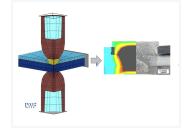
In response to scarce resources, climate policy requirements and rising demands for comfort and safety, the automotive industry must reduce the environmental impact of vehicles. As the vehicle body contributes significantly to total weight, lightweight construction measures are increasingly applied, particularly mixed construction concepts combining form-hardened steels with aluminum outer body components. While conventional joining technologies can produce similar and dissimilar joints, steel–aluminum combinations pose challenges due to thermal, electrical and chemical incompatibilities, making resistance spot welding unsuitable.
Thermo-mechanical joining processes therefore gain importance, with resistance element welding (REW) offering high potential for steel–aluminum joints. This research project focused on the fundamental investigation of two-stage REW for producing three-sheet hybrid mixed joints. Experimental and numerical studies were conducted for various material and thickness combinations. Simulation-based auxiliary element geometries were developed, welding parameters identified, joint formation analyzed and mechanical strength evaluated. A demonstrator component confirmed feasibility. The results provide deeper process understanding and practical guidance for the economical design and application of three-layer REW joints, offering significant lightweight potential in automotive body construction.
Matplus Shop
|
| P 1456 - Effect of realistic boundary conditions and structural systems on thestability behaviour of steel structures (IGF-No 21057 N)
The use of slender steel profiles enhances the competitiveness of steel structures but requires efficient verification of lateral torsional buckling. In practice, the simplified equivalent member method is still widely applied, although it is based on idealised assumptions such as single-span beams with fork supports. Real building joints, however, often show significantly different torsional stiffnesses, and system structures like continuous beams or frames are more common, leading to deviations in load-bearing behaviour.
The aim of this research project was to extend the applicability of simplified lateral torsional buckling verifications to realistic support conditions and structural systems. Existing studies on joint behaviour, multispan members and frame structures were analysed, and current as well as upcoming Eurocode design approaches were reviewed. Experimental investigations were carried out at the University of Stuttgart on practical joint conditions and at Ruhr University Bochum on two-span members, revealing the influence of joint stiffness, torsion and compression on deformation and load capacity. Validated numerical models enabled extensive parametric studies, from which substitute models and modified buckling slenderness concepts were derived. These allow a conservative and economical determination of load-bearing capacity for practical support conditions and two-span members within EN 1993-1-1:2023.
Matplus Shop
|
| P 1466 - Use of local gas flows in high speed laser welding for a reduction of weld imperfections by increasing the stability of the keyhole (IGF-No 214113 BR)
The use of high-alloy steels is crucial in many industries, and laser beam welding is widely applied due to its technological advantages. At welding speeds above 8 m/min, however, weld imperfections such as spatter formation occur, limiting the economic potential of modern solid-state lasers because of post-processing requirements and reduced weld cross-sections. This research project aimed to develop strategies to reduce such imperfections at welding speeds up to 20 m/min. A local gas flow was applied to influence keyhole and melt pool behavior by adding dynamic pressure at the upper keyhole opening. Besides argon, nitrogen and helium were investigated as shielding gases, and oxygen was added to enhance process understanding. A process chamber enabling welding under a global shielding gas atmosphere and overpressure was developed. Experiments included partial and full penetration welding, transfer to butt joints, and welding of a demonstrator component to validate industrial applicability. Results show that spatter reduction is mainly caused by increased surface tension due to shielding of the melt pool, while higher gas flow rates alter the mechanism through increased momentum transfer, affecting melt pool dynamics. Suitable process parameters for spatter-reduced high-speed laser welding were identified.
Matplus Shop
|
| P 1520 - Methods Development for the Simulation of Viscous Fingering in Adhesively Bonded Joints in steel-intensive mixed structures (IGF-No 01IF21686N)
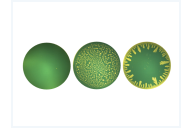
Adhesive bonding is gaining importance in many industrial applications, particularly for joining dissimilar materials such as steel and aluminum. During artificial ageing, differences in thermal expansion lead to a widening of the bond gap while the adhesive is still liquid. This causes a significant reduction of the effective bond area, which forms a characteristic meandering “viscous fingering” structure that is fixed during curing. The reduced bond area results in increased stresses in the adhesive, leading to damage, reduced load-bearing capacity and diminished durability of the joint.
The aim of the project was to develop a method to quantify the bond area actually present in the component in order to improve manufacturing processes and structural design. To this end, experimental investigations as well as finite element (FEM) and computational fluid dynamics (CFD) simulations were carried out on various specimen types. Experiments revealed a power-law relationship between relative displacement of the joining partners and bond area reduction, which was implemented in FEM models to simulate strength degradation. CFD analyses were used to reduce experimental effort; deviations from experimental results could be corrected using suitable correction functions.
Matplus Shop
|
| The research projects were funded by the Federal Ministry of Economic Affairs and Climate Energy as part of the "Industrial Collective Research" programme on the basis of a resolution of the German Bundestag.
|
|
|
|