|
Dear Sir or Madam,
Today we would like like to draw your attention to upcoming events and inform you about newly published FOSTA final reports from the focal areas of mobility, construction as well as plant and mechanical engineering. You can find these and all other FOSTA reports in the Matplus Shop.
We wish you an interesting reading.
Your FOSTA team
| IGF Congress 2026: Securing the Future. Strengthening SMEs.
On 29 September 2026, the IGF Congress 2026 will take place in Berlin. Under the motto “Securing the Future. Strengthening SMEs. – How IGF Translates Research into Practice,” the congress will focus on the achievements and future prospects of the Industrial Collective Research Programme (IGF).
Supported by the Federal Ministry for Economic Affairs and Energy (BMWE), the event will provide a platform for exchange between research, industry, and policymakers. The programme features keynote speeches from academia and industry, an interactive debate on the future of IGF, workshops on key topics in SME support, and the selection of the “IGF Project of the Year 2026.”
The congress highlights the vital role of IGF in fostering innovation and transferring research results into industrial applications, particularly for the benefit of small and medium-sized enterprises (SMEs).
more information
|
| ZEvRA 2nd International Conference
24–25 November 2026 | Gläserne Manufaktur, Dresden
From 24-25 November 2026, CIRMA 2026 brings together leading researchers, automotive OEMs, suppliers, start-ups, and sustainability experts to accelerate the transition toward circular materials and mobility systems.
The conference bridges academic innovation with industrial implementation by fostering collaboration across the full automotive value chain.
https://zevraproject.eu/CIRMA/
|
| 16. Fügetechnisches Gemeinschaftskolloquium | Fraunhofer IWU, Chemnitz

On 25 and 26 November 2026, the European Research Association for Sheet Metal Working (EFB) and the Research Association for Steel Applications (FOSTA) will host the 16th Joint Colloquium on Joining Technology at the Fraunhofer Institute for Machine Tools and Forming Technology (IWU) in Chemnitz.
The event brings together experts from industry and research who specialise in mechanical joining technology, hybrid construction methods, joint strength, design, process reliability and industrial applications. The aim is to facilitate a professional exchange on current developments, innovative solutions and future challenges in joining technology.
Confirmed presentations will be given by, amongst others:
- Audi AG
- ARNOLD UMFORMTECHNIK GmbH & Co. KG
- Böllhoff Verbindungstechnik GmbH
- Eckold technics GmbH & Co. KG
- Howmet Fastening Systems Ltd.
- thyssenkrupp Steel Europe AG
Further contributions are expected from companies and research institutions presenting practical experience, new methodological approaches, the latest research findings and issues of high industrial relevance.
In addition, opportunities to participate as a partner or exhibitor offer an attractive platform to showcase one’s own expertise, establish new contacts and engage in professional dialogue with the joining technology community.
Further information and registration: Colloquium – Joining Technology
|
| 8th European Steel Technology and Application Days
21–25 June 2027
The European Steel Technology and Application Days – ESTAD will take place for the eight time after Paris 2014, Düsseldorf 2015, Vienna 2017, Düsseldorf 2019, Stockholm 2021, Düsseldorf 2023 and Verona 2025. ESTAD was founded with the aim of creating a flagship conference bringing together steel manufacturers, suppliers, users, universities, research institutes and plant engineers and has become a leading conference for metallurgy and materials technology.
Call for Papers is now open.
|
| P 1706 - Preparation and utilization of steel chips as an economical recycled material for laser powder cladding (IGF-No 01IF22747N)
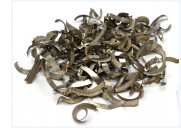
This research project investigated the recycling of steel chips from austenitic chromium-nickel alloys into powder for powder-based Directed Energy Deposition (DED). Various grinding processes were evaluated, and the resulting powders were compared with conventional AM powders. The results demonstrate that mechanical grinding is technically feasible and significantly more environmentally friendly than conventional powder production. Components manufactured from recycled chip powder exhibited mechanical properties comparable to those produced from standard AM powder, although higher oxide contents and increased energy input during welding were observed. Thorough removal of cooling lubricants before grinding proved essential to ensure powder quality. Life cycle assessment showed that the investigated grinding processes can reduce the environmental footprint by up to 70% compared with gas atomization, highlighting their potential for more sustainable additive manufacturing. more information
|
| P 1632 - Effect of cryogenic treatment in the heat treatment process of tool steels on corrosion resistance, dimensional and geometrical stability and fracture toughness (IGF-No 01IF22366N)
The research project investigated the effects of shallow cryogenic treatment integrated into conventional heat treatment on distortion, corrosion resistance, and fracture toughness of the tool steels X153CrMoV12 SM, X190CrVMo20-4 PM, and X90CrMoV18 SM. Various mechanical tests, corrosion analyses, and microstructural investigations were performed. The results show that cryogenic treatment improves dimensional stability by transforming retained austenite, although its influence on distortion is not significant. The powder-metallurgical and more homogeneous steels exhibited lower shape changes after heat treatment. Effects on corrosion resistance were generally small but partially positive, depending on the material and tempering conditions. Lower tempering temperatures and fewer tempering cycles improved corrosion properties, while cryogenic treatment supported initial corrosion resistance at higher tempering temperatures. Furthermore, cryogenic treatment enhanced fracture toughness of X153CrMoV12 SM and reduced hydrogen embrittlement susceptibility by promoting finely distributed carbide precipitates that act as hydrogen traps and decrease harmful diffusible hydrogen. more information
|
| P 1600 - Development and production of crash-optimized multi-chamber structures made of steel using profile forming technology (IGF-No 01IF22320N)
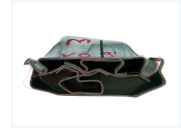
Crash structures are essential for vehicle safety and become increasingly important with the growth of electromobility and the need to protect battery systems. This research project focuses on the design of crash-optimized multi-chamber structures made of high-strength steel using graph- and heuristic-based topology optimization (GHT) and manufacturing through profiling technology. Roll-forming simulations, mechanical tests, and hardness measurements were performed to determine the influence of manufacturing processes on material properties. New optimization algorithms were developed to integrate roll-formed profile requirements, joining concepts, and manufacturability into the GHT process. Optimized crash structures were manufactured in three iterations and evaluated through drop tower tests. The experimental results showed very good agreement with crash simulations, confirming the accuracy of the developed simulation methods. The results demonstrate that GHT enables the design of highly efficient and optimized crash structures for future lightweight vehicle applications. more information
|
| P 1589 - Development of a methodical approach for spatter prevention in resistance spot welding through multi-parameter process analysis using artificial intelligence (IGF-No 22104 N)
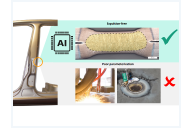
Lightweight structures made from advanced high-strength steels are essential for resource-efficient and affordable mobility. However, resistance spot welding (RSW) is susceptible to weld expulsion caused by production tolerances, gaps, or edge effects, reducing weld nugget size and requiring additional welds to ensure strength. This research project develops an AI-based approach to predict and prevent weld expulsion. Multiparametric analyses of welding process data are used to identify the causes of expulsion and determine the optimal current shutoff time to maximize weld nugget size without expulsion. The required AI training data are generated through extensive RSW experiments and finite element simulations. The project also investigates the effects of different expulsion mechanisms on joint strength and electrode life. The results will improve process reliability, reduce manufacturing costs, and enable SMEs in the sheet metal industry to make more efficient use of advanced high-strength steels. more information
|
| P 1573 - Manufacturing of high-strength, ductile components from a low-alloy tempering steel using innovative quenching & partitioning press hardening strategies (IGF-No 22350 BR)
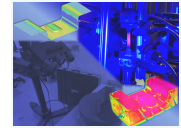
The research project investigates the integration of the Quenching and Partitioning (Q&P) heat treatment strategy into industrial press hardening processes for low-alloy ultra-high-strength steels. Q&P steels achieve an exceptional combination of very high strength (Rm ≥ 2000 MPa) and high ductility (A ≥ 10%) through a microstructure of martensite and stabilized retained austenite, while requiring only carbon and silicon instead of costly alloying elements. The process combines controlled quenching with carbon partitioning to optimize the material properties. The project aims to adapt established press hardening routes for manganese-boron steels to Q&P steels, enabling the cost-effective production of complex, lightweight components with existing manufacturing equipment. Successful implementation would allow the automotive industry and its suppliers to produce a new generation of ultra-high-strength, ductile components while reducing material costs and expanding the capabilities of current production technologies. more information
|
| P 1571 - Single-sided laser beam submerged arc hybrid welding of high-strength steels (IGF-No 01IF22043N)
The research project investigated the LUPuS hybrid welding process for reliable single-sided, single-pass welding of high-strength steel plates up to 30 mm thick. The aim was to achieve full-penetration welds while preventing weld defects and melt sagging. Different weld pool support systems were evaluated. Conventional flux and ceramic supports proved unsuitable because the laser beam damaged them, whereas an electromagnetic weld pool support enabled reproducible, high-quality weld roots meeting DIN EN ISO 12932 quality requirements. Diffusible hydrogen measurements showed levels comparable to conventional submerged arc welding, with no critical increase under optimized process conditions. Mechanical testing of API X65 and API X80 steels confirmed standard-compliant hardness, toughness, and tensile properties. Finally, a demonstrator welded from API X80 successfully validated the process, highlighting the potential of LUPuS hybrid welding for efficient, high-quality fabrication of thick-walled, high-strength steel components and large-diameter pipes. more information
|
| P 1562 - Increasing the storage and transport efficiency of liquid hydrogen in steel fibre composite tanks by thermally sprayed TBC layers (IGF-No 39 LBR)
The research project developed innovative tank concepts for maritime production, storage, and transport of liquid hydrogen (LH₂) within wind power-to-gas systems. Existing vacuum-insulated stainless-steel tanks suffer from high weight, thermal losses, and significant boil-off rates, limiting efficiency. To overcome these challenges, fibre-reinforced plastic (FRP)-steel hybrid tanks with high specific strength and corrosion resistance were investigated. In addition, thermally sprayed thermal barrier coatings (TBC) were adapted for cryogenic applications to reduce evaporation losses and protect against dynamic sloshing loads. Various coating materials, including MCrAlY alloys and innovative iron-based amorphous coatings, were evaluated regarding insulation and mechanical properties at low temperatures. The results demonstrated that TBC layers and fibre composite windings can be successfully combined and manufactured in a defined sequence. These findings enabled the production and testing of a prototype tank, providing a foundation for efficient and sustainable LH₂ storage and transport solutions. more information
|
| P 1560 - Influence of corrosive media on the fatigue strength of offshore wind turbines (IGF-No 37 LN)
The research project investigated the influence of corrosion on the fatigue strength of offshore steel structures after the failure of their corrosion protection. Fatigue tests on base material, fillet welds, and butt welds were combined with 3D scanning and residual stress measurements to develop reliable methods for predicting the remaining service life of corroded components. The results showed that notch stresses and welding-induced residual stresses are key factors for accurate fatigue life assessment. Applying local fatigue concepts significantly reduced the scatter of S–N curves and improved prediction reliability. The replica technique demonstrated that the developed methods can be transferred to real structures during inspections. Long-term corrosion tests revealed that corrosion affects different geometries differently, but over time tends to equalize fatigue strength by reducing sharp notches while increasing the severity of initially mild notches, leading to similar fatigue performance after prolonged exposure. more information
|
| P 1559 - Integrated planning tool for cost and 3D structural planning for offshore wind farms for H2 generation (IGF-No 36 LBR)
The research project developed a planning methodology and software tool for offshore wind farms with integrated hydrogen production. Its goal is to simplify the technical and economic planning of such systems and enable efficient use of fluctuating renewable electricity through hydrogen production by electrolysis. Because integrated offshore hydrogen systems are still at a low technology readiness level, the project evaluated different electrolysis and hydrogen transport concepts as well as their interactions. A system dynamics model and a 3D planning tool were created to assess technical, economic, and site-specific factors, including water depth and distance to shore using GIS data. The tool calculates hydrogen production, system costs, and economic performance for different scenarios, allowing comprehensive comparison of design alternatives. It supports decision-making, reduces planning effort, and facilitates the development of future offshore wind farms with integrated hydrogen infrastructure. more information
|
| The research projects were funded by the Federal Ministry of Economic Affairs and Energy as part of the "Industrial Collective Research" programme on the basis of a resolution of the German Bundestag.
|
|
|
|